Key takeaways
- 304 (18/8) stainless steel is food-safe and the right choice for water and most everyday drinkware.
- 316 adds about 2–3% molybdenum, which gives clearly better resistance to chlorides and acids — salty, acidic and sports drinks, coffee and tea.
- For a tumbler or bottle, what usually matters is the inner liner: many quality products pair a 316 inner with a 304 outer shell.
- A magnet cannot tell 304 from 316. Ask for material certificates and food-contact test reports instead.
- Avoid 201 stainless steel for parts that touch the drink.
What 304 and 316 actually are
Both are austenitic stainless steels — the family used for almost all quality drinkware. 304 contains roughly 18% chromium and 8% nickel, which is why it is often sold as 18/8. 316 keeps a similar chromium level, raises nickel to about 10–14% and adds 2–3% molybdenum. That molybdenum is the whole story: it makes the protective chromium-oxide layer much harder to break down in the presence of chlorides (salt) and acids.
| Property | 304 (18/8) | 316 |
|---|---|---|
| Typical composition | ~18% Cr, ~8% Ni | ~16–18% Cr, ~10–14% Ni, 2–3% Mo |
| Food-contact use | Yes | Yes |
| Resistance to salt and chlorides | Good | Clearly better |
| Resistance to acidic drinks | Good | Better |
| Material cost | Lower | Higher |
| Typical use in drinkware | Outer shells, water bottles, promotional ranges | Inner liners for coffee, tea and sports drinks; premium ranges |
Does the grade change how a bottle performs?
Not in the way most buyers expect. Insulation comes from the vacuum between the two walls, not from the grade of steel, so a 304 bottle and a 316 bottle of the same design keep drinks hot or cold for the same time. Weight, look and feel are also practically identical.
Where the grade matters is long-term resistance to what you put inside. With plain water, 304 performs very well for years. With coffee, tea, fruit juice, sports drinks containing electrolytes, broth or anything salty, 316 is much less likely to show pitting, staining or a metallic note over time. If your customers will refill the same bottle with coffee every day, the inner liner is where 316 earns its cost.
When to choose 316
- Coffee and tea programmes — café merchandise, office coffee tumblers, tea infuser bottles.
- Sports and wellness — bottles used with electrolyte or protein drinks.
- Food jars and pots that hold soup, broth or salty food.
- Coastal and marine customers, where salty air reaches the bottle every day.
- Premium positioning — buyers in many markets now look for “316” on the base, and it supports a higher retail price.
When 304 is the right call
- Water bottles for staff, schools, gyms and events.
- High-volume promotional programmes where cost per unit drives the decision.
- Outer shells of double-wall products, which never touch the drink.
- Lids, rings and decorative steel parts.
What about 201 stainless steel?
Grade 201 replaces part of the nickel with manganese to reduce cost. Its corrosion resistance is noticeably lower than 304, and it is not a good choice for anything that touches the drink. It sometimes appears in very cheap drinkware, particularly in outer shells. If a quotation looks unusually low, ask which grade is used for each steel part.
How to verify the grade you are buying
- Do not rely on a magnet. Austenitic steels are generally non-magnetic, but 304 can become slightly magnetic after forming, and a magnet cannot separate 304 from 316 at all.
- Ask for the material certificate (mill test report) for the coil or tube used in your order.
- Ask for food-contact test reports on the finished product — FDA for the United States, LFGB for Germany and much of the EU.
- Check the marking. Quality liners are usually stamped “304” or “316” on the base; ask for this in your specification.
- For large programmes, test independently. A third-party lab can confirm the grade by spectrometry before shipment.
How to specify stainless steel in your RFQ
A clear request avoids most misunderstandings. List the grade for every part, the standard you need and the documents you expect:
- Inner liner: 316 stainless steel (or 304)
- Outer shell: 304 stainless steel
- Lid and seals: material (PP, Tritan, silicone) and BPA-free requirement
- Compliance: FDA and/or LFGB food-contact testing; any market-specific requirement
- Documents: material certificate, test reports, base marking
Our 316 range
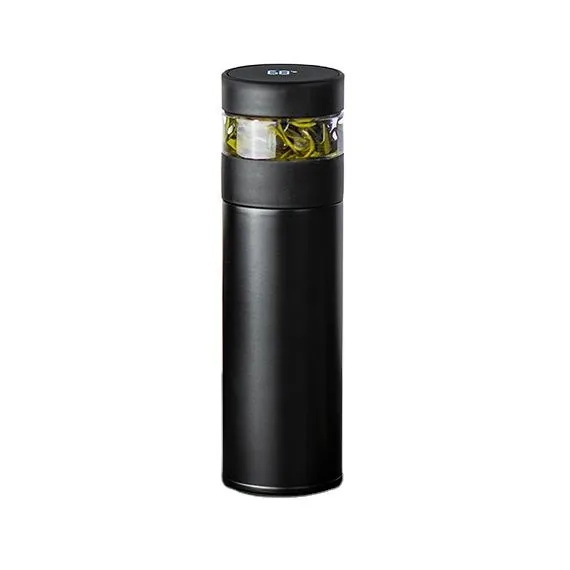
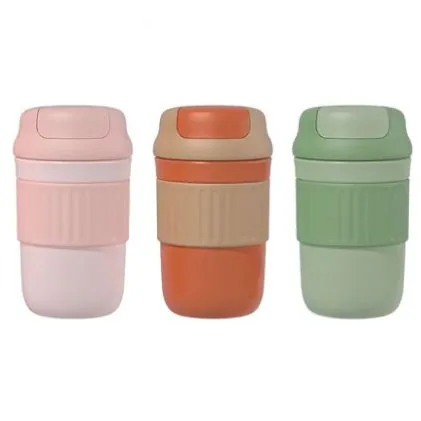
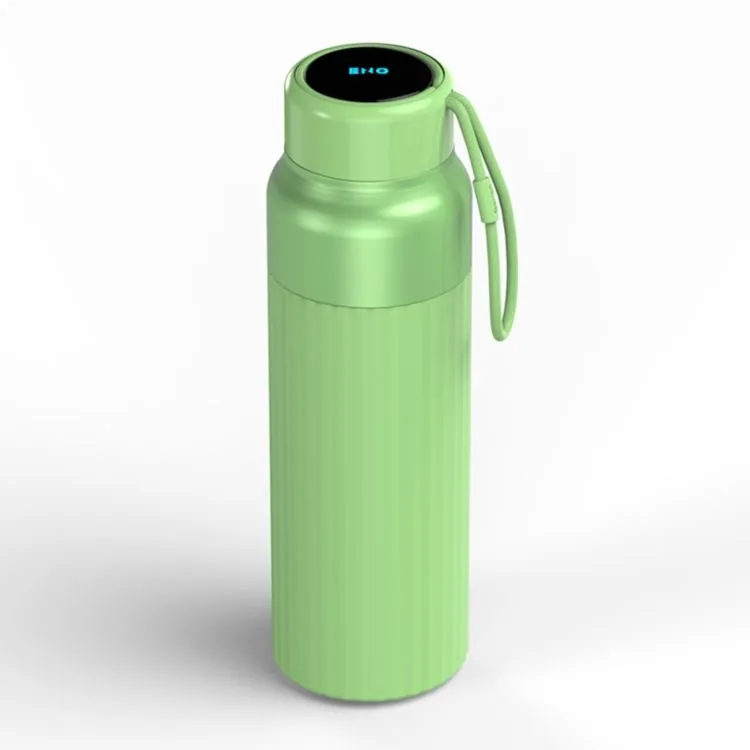
These models already use a 316 stainless inner: the C05 Smart Tea Infuser Bottle, the 500 ml Car Coffee Flask, the 15 oz Double-Wall Tumbler, the 510 ml Tumbler with Grip Case, the 420 ml Tumbler with Lid, the 500 ml LED Smart Bottle and the 2000 ml Vacuum Pot. For other steel models, ask about 316 options in your inquiry.
Frequently asked questions
Is 316 stainless steel safer than 304?
Both are safe for food and drink contact. 316 is not “safer” — it is more resistant to corrosion from salt and acids, which keeps it looking and tasting clean for longer with coffee, tea and sports drinks.
Does 316 keep drinks hot longer than 304?
No. Heat retention comes from the vacuum between the walls and the lid design. Grade has no meaningful effect on insulation.
Why is my 304 bottle slightly magnetic?
Forming and welding can make 304 slightly magnetic. It does not mean the steel is fake — but it also means a magnet cannot be used to check the grade.
Can I order 316 in small quantities?
Yes. Several of our 316 models start from 1–2 pieces for samples, and others from 100–200 pieces. Each product page lists its MOQ.