Key takeaways
- As a material, titanium is about 40% lighter than stainless steel (density ≈ 4.5 vs ≈ 8.0 g/cm³).
- Titanium is highly inert and corrosion-resistant, which is why it is prized for a neutral taste with tea and coffee.
- Insulation depends on vacuum construction, not on the metal — a well-made steel bottle insulates as well as a titanium one.
- Titanium costs more and comes in fewer shapes; stainless steel offers more sizes, finishes and lower unit prices.
- Choose titanium for premium gifts, outdoor and ultralight use; choose stainless steel for volume programmes and everyday bottles.
Side-by-side comparison
| Factor | Titanium | Stainless steel (304 / 316) |
|---|---|---|
| Material density | ≈ 4.5 g/cm³ | ≈ 8.0 g/cm³ |
| Taste | Very neutral | Neutral; 316 better with acidic drinks |
| Corrosion resistance | Excellent, including salt water | Good (304) to very good (316) |
| Insulation (double-wall vacuum) | Depends on construction | Depends on construction |
| Single-wall use over a flame | Common for outdoor cups and bottles | Possible, but heavier |
| Finishes | Natural metal, anodised and gradient colours | Powder coat, paint, gradient, full-wrap print |
| Shapes and sizes | Fewer, mostly compact | Very wide range |
| Unit price | Higher | Lower |
| Typical MOQ in our range | 1–50 pieces | 1–3,000 pieces depending on model |
Weight: where titanium clearly wins
Titanium has a density of about 4.5 g/cm³ against about 8.0 g/cm³ for stainless steel, so the same amount of metal weighs roughly 40% less. In a finished bottle the saving depends on wall thickness, the lid and whether the bottle is single- or double-walled, but titanium bottles are consistently the lightest metal option — which is why hikers, cyclists and travellers ask for them.
Taste and hygiene
Titanium forms a very stable oxide layer that makes it extremely inert. It does not react with tea, coffee or acidic drinks, and many tea drinkers choose it precisely for that neutral taste. Quality stainless steel is also food-safe and neutral; if your customers drink a lot of coffee, tea or sports drinks, a 316 inner is the steel equivalent — see 304 vs 316 stainless steel.
Insulation: not a reason to choose either
A common misconception is that titanium insulates better. In a double-wall bottle, heat retention comes from the vacuum between the walls and from the lid design. A well-made stainless steel vacuum bottle keeps drinks hot or cold as long as a titanium one of similar design. Choose the metal for weight, taste, look and price — and compare insulation figures model by model.
Durability and outdoor use
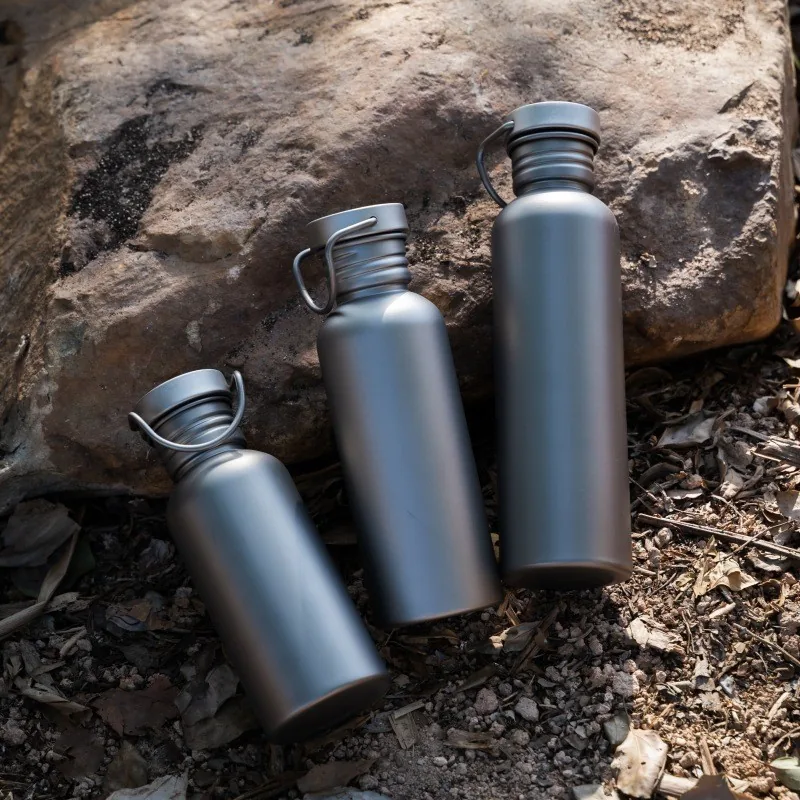
Both metals are tough enough for daily use. Titanium’s corrosion resistance makes it a natural fit near the sea and for long trips, and single-wall titanium bottles can be heated directly over a flame — our titanium outdoor bottle is designed for exactly that. Never heat a double-wall vacuum bottle of any metal: the sealed space can be damaged.
Look, finishes and branding
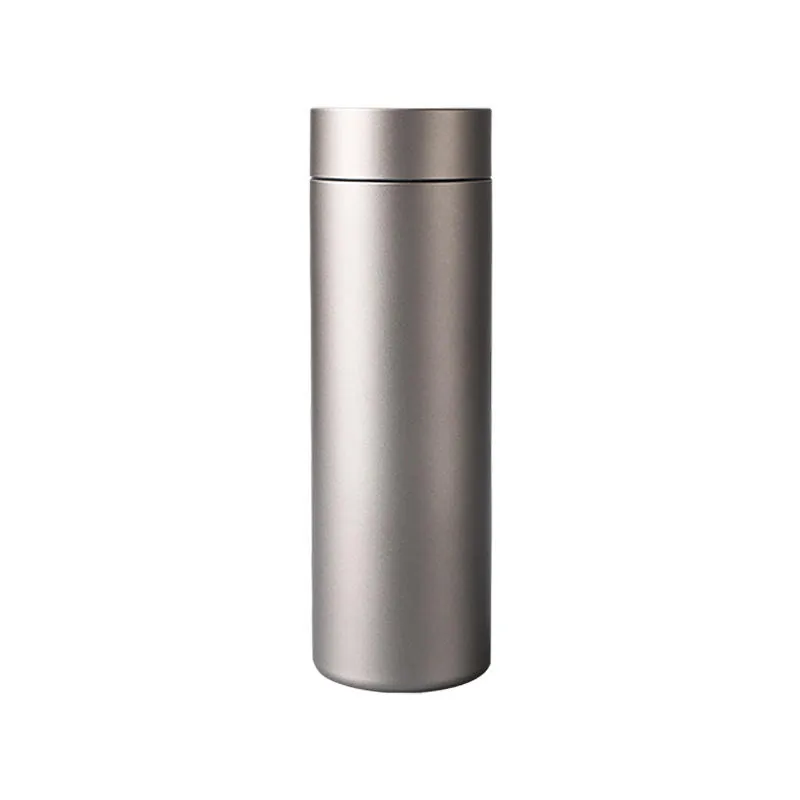
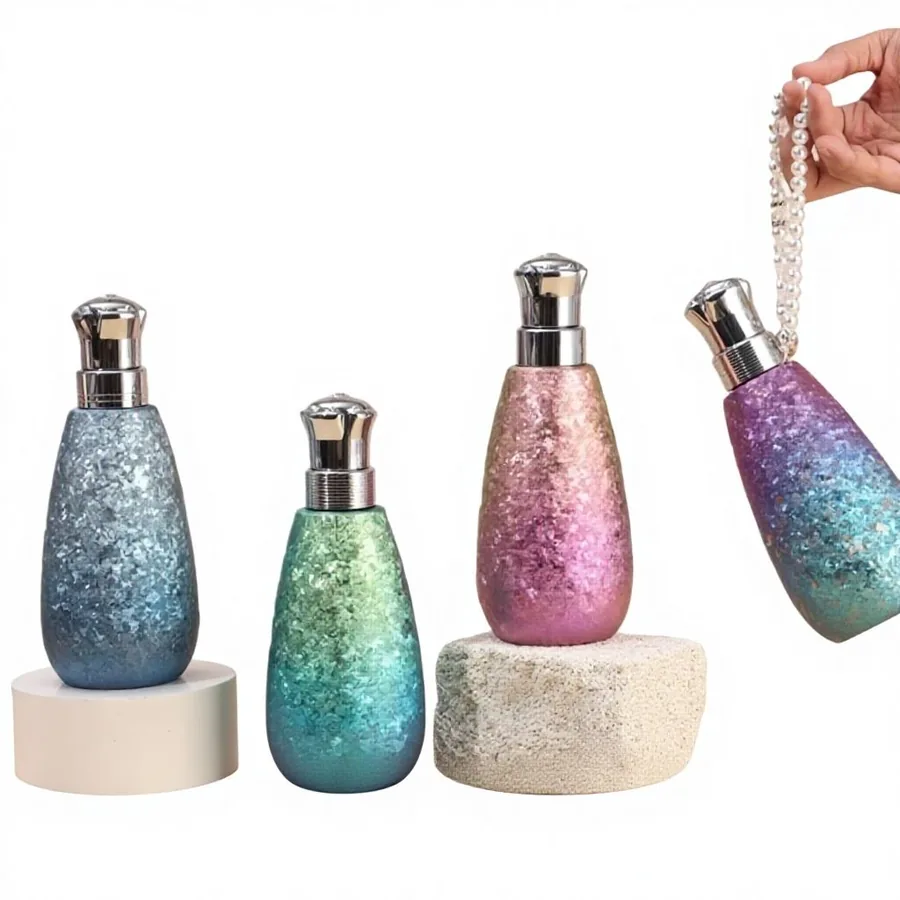
Titanium’s natural grey has a technical, premium character, and it supports distinctive colour finishes such as the shimmering gradient on our 330 ml Ice-Crystal Bottle. Stainless steel offers the widest choice of colours and coatings and is the better canvas for full-colour prints. Both take laser engraving well for a permanent logo — compare methods in our logo printing guide.
Cost and minimum orders
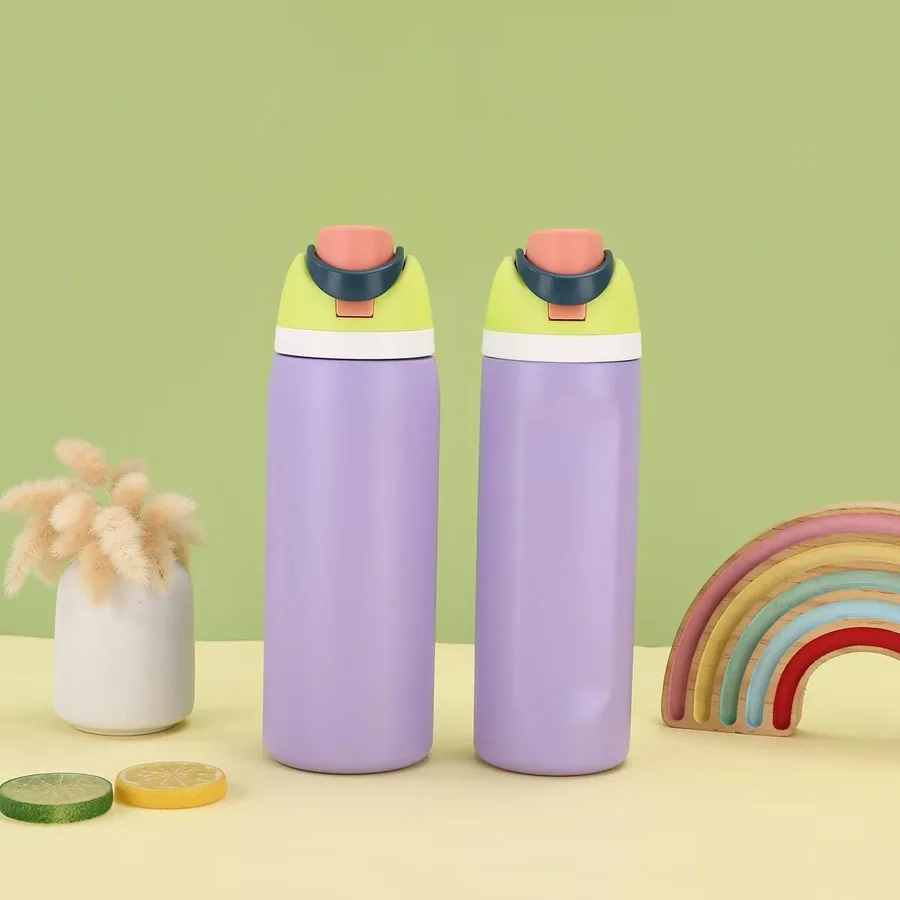
Titanium is more expensive as a raw material and harder to form and weld, so unit prices are higher and the range of shapes is narrower. In return, our titanium models have low minimum orders — from 1 to 50 pieces — which makes them practical for premium samples, small executive gift runs and direct-to-consumer tests. Stainless steel is the economical choice when you need thousands of pieces in several sizes, for example the 19/24/32 oz straw bottle.
Which should you choose?
| Use case | Recommended | Why |
|---|---|---|
| Executive and VIP gifts | Titanium | Premium material story, distinctive finishes, low MOQ |
| Hiking, cycling, camping | Titanium | Lowest weight; single-wall models can go over a flame |
| Tea programmes | Titanium or 316 steel | Neutral taste with tea and acidic drinks |
| Staff and event water bottles | Stainless steel | Many sizes, lower unit price, strong insulation |
| Large promotional campaigns | Stainless steel | Best cost per piece at volume, wide colour choice |
| Full-colour, all-over artwork | Stainless steel | Better canvas for heat transfer and UV printing |
Many brands use both: titanium for a small premium tier and stainless steel for the main programme. Browse the titanium range and the stainless sport bottles, or send us your brief for a recommendation.
Frequently asked questions
Is titanium better than stainless steel for water bottles?
It is lighter, more inert and more corrosion-resistant, but more expensive and available in fewer shapes. For everyday and promotional bottles, stainless steel is usually the better value.
Does a titanium bottle keep water cold longer?
Not by itself. In double-wall bottles insulation comes from the vacuum and the lid, so similar designs perform similarly in either metal.
Can you laser engrave a logo on titanium?
Yes. Laser engraving gives a permanent, precise mark on titanium, just as on stainless steel.
What is the minimum order for custom titanium bottles?
In our range, from 1 piece (pocket cup) up to 50 pieces (260 ml mini cup), depending on the model.